Đổng Kim Yến Nhi
Giới thiệu về bản thân


SET A | |
Your answers | Your questions |
My favourite city My favourite city is Sydney. It's warm and sunny. They are friendly, and they love sports. I can take surfing lessons and see wildlife like kangaroos and koalas. It's famous for beautiful beaches and the Sydney Opera House. | My friend’s favourite city What is your favourite city? What's the weather in Tokyo like? How are the people there? What can you do in Tokyo? What is Tokyo famous for? |
---
SET B | |
Your answers | Your questions |
My favourite city My favourite city is Tokyo. It's warm in summer and cold in winter. They are nice and hard-working. I can eat sushi and visit temples. It's famous for Tokyo Skytree (the second-tallest building) and beautiful cherry blossoms. | My friend’s favourite city What is your favourite city? What's the weather in Sydney like? How are the people there? What can you do in Sydney ? What is Sydney famous for? |
Question 1: My favourite TV programme is ‘Blue Planet’. It's an educational programme about the ocean.
Question 2: I watch TV every day after I finish my homework.
Question 3: Yes, I played football with my friends last Saturday.
Question 4: My future house will be big and have a large garden. It will be on the ocean.
Question 5: I recycle paper and plastic to help the environment. I also plant trees in my neighbourhood.
Question 6: I would like to have a home robot. It can help me clean my room, cook meals, and take out the trash.
Thuật toán giải phương trình bậc nhất ax + b = 0:
Bước 1. Nhập giá trị của a và b.
Bước 2. Kiểm tra nếu a = 0.
Nếu a = 0, kiểm tra nếu b = 0.
Nếu b = 0, phương trình có vô số nghiệm.
Nếu b ≠ 0, phương trình vô nghiệm.
Nếu a ≠ 0, tính x = -b/a.
Bước 3. Xuất giá trị của x.
Sử dụng bản đồ hoặc ứng dụng chỉ đường là áp dụng thuật toán tìm đường đi ngắn nhất hoặc tối ưu nhất.
- Đầu vào: Điểm xuất phát, điểm đến.
- Các bước: Xác định vị trí, tìm đường, di chuyển theo chỉ dẫn.
- Đầu ra: Đường đi tối ưu.
+ \(S = \frac{1}{31} + \frac{1}{32} + \frac{1}{33} + \ldots + \frac{1}{60}\)
\(S < \left(\right. \frac{1}{30} + \frac{1}{30} + \ldots + \frac{1}{30} \left.\right) + \left(\right. \frac{1}{40} + \frac{1}{40} + \ldots + \frac{1}{40} \left.\right) + \left(\right. \frac{1}{50} + \frac{1}{50} + \ldots + \frac{1}{50} \left.\right)\)
\(S < \frac{10}{30} + \frac{10}{40} + \frac{10}{50} < \frac{48}{60} = \frac{4}{5} ;\)
+ \(S > \left(\right. \frac{1}{40} + \frac{1}{40} + \ldots + \frac{1}{40} \left.\right) + \left(\right. \frac{1}{50} + \frac{1}{50} + \ldots + \frac{1}{50} \left.\right) + \left(\right. \frac{1}{60} + \frac{1}{60} + \ldots + \frac{1}{60} \left.\right)\)
\(S > \frac{10}{40} + \frac{10}{50} + \frac{10}{60} > \frac{3}{5} .\)
a) Số lượng bóng rổ bán được trong tháng 1, tháng 2, tháng 3 lần lượt là:
\(15\) quả; \(20\) quả; \(10\) quả.
b) Cả ba tháng cửa hàng bán được:
\(15 + 20 + 10 = 45\) (quả)
c) Tháng 2 cửa hàng bán được nhiều hơn tháng 3:
\(20 – 10 = 10\) (quả)
d) Tỉ số giữa số lượng bóng bán được trong tháng 1 và tháng 2 là:
\(3 : 4 = \frac{3}{4}\)
1. a) \(O\) thuộc các đoạn thẳng: \(AB;CD;OA;OB;OC;OD.\)
b) Ta có \(O\) nằm giữa hai điểm \(A\) và \(B\) và \(OA=OB=3\) cm nên \(O\) là trung điểm của đoạn thẳng \(A B .\)
2. a) Số đo góc \(x O y\) bằng \(3 0^{\circ}\).
b) 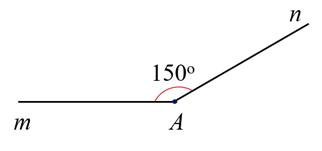
a) \(\frac{5}{17} - \frac{25}{31} + \frac{12}{17} + \frac{- 6}{31}\)
\(= \frac{5}{17} - \frac{25}{31} + \frac{12}{17} + \frac{- 6}{31}\)
\(= \left(\right. \frac{5}{17} + \frac{12}{17} \left.\right) + \left(\right. - \frac{25}{31} + \frac{- 6}{31} \left.\right)\)
\(= 1 + \left(\right. - 1 \left.\right)\)
\(=0\)
b) \(\frac{17}{8} : \left(\right. \frac{27}{8} + \frac{11}{4} \left.\right)\)
\(= \frac{17}{8} : \left(\right. \frac{27}{8} + \frac{22}{8} \left.\right)\)
\(= \frac{17}{8} : \frac{49}{8}\)
\(= \frac{17}{49}\).
c) \(\frac{1}{5} \cdot \frac{11}{16} + \frac{1}{5} \cdot \frac{5}{16} + \frac{4}{5}\)
\(= \frac{1}{5} \cdot \left(\right. \frac{11}{16} + \frac{5}{16} \left.\right) + \frac{4}{5}\)
\(= \frac{1}{5} \cdot 1 + \frac{4}{5}\)
\(= \frac{1}{5} + \frac{4}{5} = 1.\)
d) \(\frac{5}{6} : 25 - 2 + \frac{- 7}{3} \cdot \frac{2}{7}\)
\(= \frac{5}{6} : 25 - 2 + \frac{- 7}{3} \cdot \frac{2}{7}\)
\(= \frac{5}{6} \cdot \frac{1}{25} - 2 + \frac{- 2}{3}\)
\(= \frac{1}{30} - 2 + \frac{- 2}{3}\)
\(= \frac{1}{30} - \frac{60}{30} + \frac{- 20}{30}\)
\(= \frac{1}{30} - \frac{60}{30} + \frac{- 20}{30} = \frac{- 79}{30}\)