
Hãy nhập câu hỏi của bạn vào đây, nếu là tài khoản VIP, bạn sẽ được ưu tiên trả lời.


Poverty is no shame
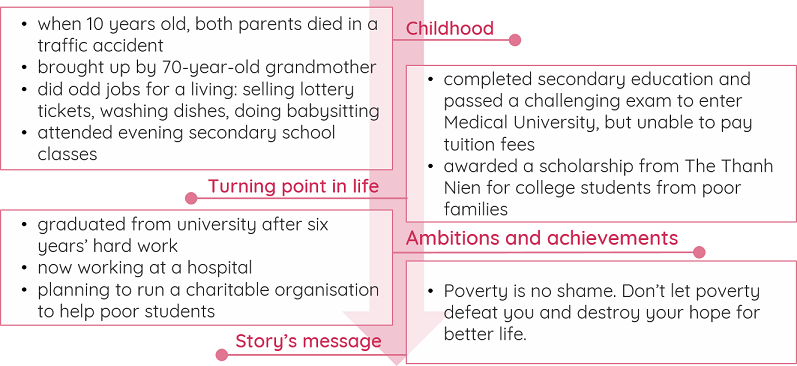
My parents died in a traffic accident when I was ten years old, so I grew up with my grandmother who was too old and weak to work. I had to leave school and did odd jobs to earn a living: selling lottery kets, washing dishes and doing babysitting. When I was 15, my grandma encouraged me to attend evening classes, so I could improve my literacy and job prospects.
After lots of hardship and effort, I completed secondary education and passed a challenging exam to enter Medical University, which is the dream of many students. However, I could not pay the tuition fees and had to reject the offer. The door to a new life was closed before me. I was completely disappointed and saw only gloomy days ahead.Then something incredible happened: I was awarded a scholarship from The Thanh Nien for college students from poor families. This was really a turning point in my life because I could start my university studies and hope for a better future.
Six years of hard work at the university and of trying to live on a very tight budget came to an end at last. Now I am working as a doctor at a hospital, but I will never forget those difficult days. I am planning to set up and run a charitable organisation to help poor students, as a way to acknowledge other people for supporting me.
I've told my own story hoping to encourage other people me to overcome hard times. Don't let poverty defeat you and destroy your hopes for a better future. This is my motto.

Name: ( Write your name )
Address: ( your address )
Mobile: ( write you mobilephone )
Email: ( write your email )
Personal summary and career objectives
I am a responsible individual who can work hard, communicates well, and has excellent interpersonal skills. I have recently completed upper secondary education and received the National Certificate of Secondary Education. I am seeking a starting position as a barista so that obtain real-world experience and learn new skills.
Education and qualifications
2019-2021: Dich Vong Upper Secondary School
2015 -2019: Dich Vong Lower Secondary School
2010 - 2015: Dich Vong Primary School
Work experience
Summer, 2020: Waiter at a student canteen
Responsibilities
Greeting customers and arranging seats for them
Taking orders from customers and serving them snacks and drinks
Skills
Good communication and interpersonal skills
Interests
Reading books about making drinks
Learning foreign languages
References
Available upon request
TL
Hi , my name is .... and i would to apply for a position in the city zoo . When I was little, I always dreamed of working in a zoo and i think this a great opportunity to apply for this job .I love animal and have many years of experience in taking care of animal so i think this will be easy to do this job
HT
Em viết phần intro nha:
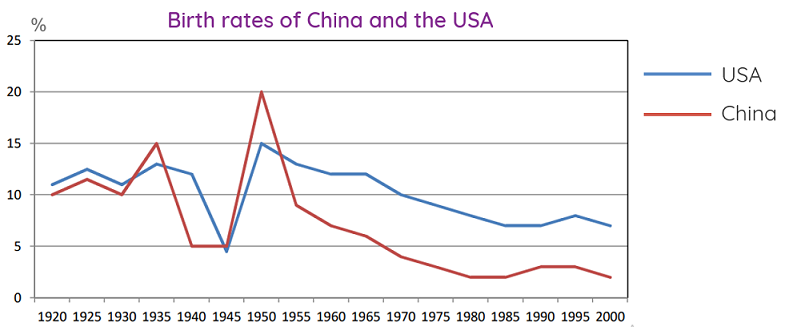
The chart above decsribes how the birth rates of 2 countries namely China, USA changed in 80 years which started from 1920
Answer:
The line graph compares the birth rates in China and the US and how these rates changed from 1920 to 2000.
Overall, there was a general decline in fertility of both nations throughout the time surveyed. However, the US’s birth rates almost was higher than that of China over the whole period.
American saw a significant fluctuation in the birth rates between 1920 to 1935, but it always remained over 10%. However, in the following decade, the fertility of the US decreased sharply to under 5 %. From 1945 to 1950, there was a rapidly increased in American’s birth rates, at 15%, reaching the highest point of it’s own during the whole period. From that on, the fertility of the US fell gradually to 7% in 2000.
During the 80-year period, the birth rates in China changed more significantly than in the US. It fell down to 5% in the year 1940, then reaching a peak of whole line graph in 1950, at 20%. Over the remainder of the period, China saw a sharply drop in the birth rates to only about 2% until 2000.
Intelligent Robots play a vital role in modern days. Besides benefits, we must consider disadvantages when using them.
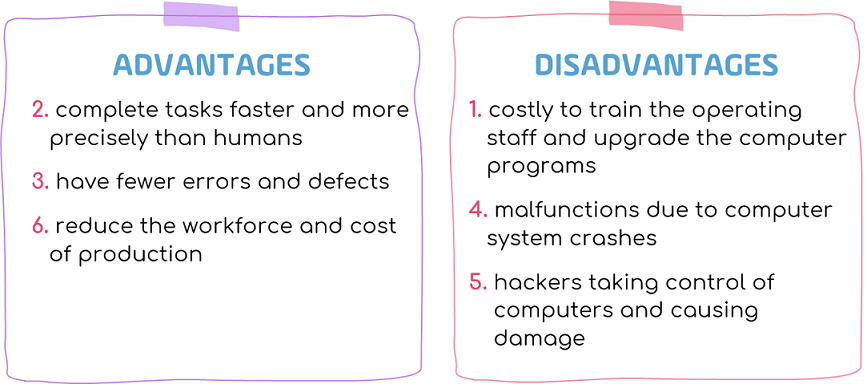
First, look at the most positive points. Thanks to robots and A.I technology, the number of workforce can be reduced but the production even increases more, especially in the manufacturing industry. The robots can perform the tasks faster than the humans and much more consistently and accurately. They can work at places 24/7 without any salary and food. Additionally, they don’t get bored. In medicine, they helps doctors to diagnose diseases, do the surgeries, especially tiny surgeries with highest accuracy. In some hospitals, the robo pets can help the patients with depression and they keep them active.
On the contrary, robots bring about some troubles. First and for most, training is needed to operate the system, so we need to pay for scientists and trainees, maintenance and reparation expenditure, which raise the cost overall. Another point I’d to mention is the machine malfunction, which creates lots of troubles and confusions, and even sometimes lead to unexpected accidents. It’s reported that a robot in a car manufacturing factory killed a worker. This results in a worrisome of people using A.I for medical purposes. Furthermore, the robots are not able to act any different from what they are programmed to do. With the heavy application of robots, the humans may become overly dependent on the machines, losing their mental capacities. If the control of robots goes in the wrong hands, the robots may cause the destruction.
In conclusion, I suppose that we need to take advantages of A.I to make our life better, but remember its dangers and risks to take precaution timely.
Dịch:
Robot thông minh đóng một vai trò quan trọng trong thời hiện đại ngày nay. Ngoài lợi ích, chúng ta phải xem xét những bất lợi khi sử dụng chúng.
Trước tiên, hãy nhìn vào những điểm tích cực nhất. Nhờ robot và công nghệ A.I, số lượng lao động có thể giảm xuống nhưng năng suất thậm chí còn tăng nhiều hơn, đặc biệt là trong ngành chế tạo. Các robot có thể thực hiện các nhiệm vụ nhanh hơn con người và hơn nữa một cách nhất quán và chính xác. Chúng có thể làm việc tại các địa điểm 24/7 mà không cần có lương hay thực ăn. Ngoài ra, chúng không cảm thấy buồn chán. Trong y học, chúng giúp các bác sĩ chẩn đoán bệnh tật, phẫu thuật, đặc biệt là các tiểu phẫu với độ chính xác cao nhất. Ở một số bệnh viện, thú nuôi robot có thể giúp bệnh nhân trầm cảm và giữ họ hoạt động.
Ngược lại, robot tạo ra một số rắc rối. Đầu tiên nhất, đào tạo là cần thiết để vận hành hệ thống, do đó chúng ta cần phải trả cho các nhà khoa học và học viên, chi phí bảo dưỡng và sửa chữa, làm tăng chi phí tổng thể. Một điểm tôi muốn đề cập đến là sự cố máy móc, tạo ra nhiều rắc rối, và thậm chí đôi khi dẫn đến những tai nạn không ngờ đến. Đã được ghi nhận rằng một robot trong một nhà máy sản xuất xe hơi giết chết một công nhân. Điều này dẫn đến một sự đáng lo ngại của người sử dụng A.I cho mục đích y tế. Hơn nữa, các robot không thể hành động khác với những gì chúng được lập trình để làm. Với việc ứng dụng nhiều robot, con người có thể trở nên quá phụ thuộc vào máy móc, mất khả năng tinh thần của họ. Nếu sự kiểm soát của robot đi sai hướng, các robot có thể gây ra sự phá hủy.
Tóm lại, tôi cho rằng chúng ta cần tận dụng lợi thế của A.I để làm cho cuộc sống của chúng ta tốt hơn, nhưng hãy nhớ đến những nguy cơ và rủi ro của nó để kịp thời phòng ngừa.
You can use this to refer:
Intelligent Robots play a vital role in modern days. Besides benefits, we must consider disadvantages when using them.
First, look at the most positive points. Thanks to robots and A.I technology, the number of workforce can be reduced but the production even increases more, especially in the manufacturing industry. The robots can perform the tasks faster than the humans and much more consistently and accurately. They can work at places 24/7 without any salary and food. Additionally, they don’t get bored. In medicine, they helps doctors to diagnose diseases, do the surgeries, especially tiny surgeries with highest accuracy. In some hospitals, the robo pets can help the patients with depression and they keep them active.
On the contrary, robots bring about some troubles. First and for most, training is needed to operate the system, so we need to pay for scientists and trainees, maintenance and reparation expenditure, which raise the cost overall. Another point I’d to mention is the machine malfunction, which creates lots of troubles and confusions, and even sometimes lead to unexpected accidents. It’s reported that a robot in a car manufacturing factory killed a worker. This results in a worrisome of people using A.I for medical purposes. Furthermore, the robots are not able to act any different from what they are programmed to do. With the heavy application of robots, the humans may become overly dependent on the machines, losing their mental capacities. If the control of robots goes in the wrong hands, the robots may cause the destruction.
In conclusion, I suppose that we need to take advantages of A.I to make our life better, but remember its dangers and risks to take precaution timely.


At twenty-five past nine, the bell rings and all the students go into the yard. It's time for recess. They are all happy and exited. They mêt their friends and have some fun. Many are talking about the last class or last movie. Some are eating and drinking as well as chatting. Some students are playing games like blindman's bluff or catch. Some boys are playing marbles and some girls are skipping rop. But the most popular activity is talking. The yard is very noisy until the bell rings. Then everyone goes indoors and classes begin again.


Minh likes collecting stickers in a beautiful album. The sticker album was passed around to everyone in his class presentation. All sorts of stickers were collected from other countries. The pupils were amazed at his collection. Some questions were given. When Trang saw it, she asked him if he was interested in exchanging stickers. She started collecting a month ago. Minh was more than happy to see Trang's stickers. He agreed to help her with her collection.


Water plays a very important role in everyday life,Water accounts for 60-70% of body mass. Everyday, adults need 35 g of water for 1 kg of bod,Water demand for children is 3 to 4 times higher than that of adultsy,On average each person needs 6-8 glasses of water a day.As we all know, water plays an essential role, not just for humans but for all living things on Earth. Water needed for living, agricultural production, industrial production ,,, all aspects of life
chả biết có đúng ko chỉ biết là làm đc thế thôi
 tội nhề trên thì cười dưới lại khóc


Types of bulding: Apartment, block of plats, ufo,cottage,stilt
Room:bedroom,bathroom,kitchen,...
Furniture: Fridge,washing machine.dishwasher,fan,celling fan,gas stove

* Paragraph 1: Habitat and location of the species below. (Đoạn 1: Môi trường sống và địa điểm của các loài được liệt kê bên dưới.)
Example:
- Komodo dragons are found in the wild... (Rồng Komodo được tìm thấy trong hoang dã ...)
- They live in forests,... (Chúng sống trong rừng, ...)
* Paragraph 2: Physical features and diet (Đặc điểm về hình thể và chế độ ăn uống)
Example:
- Although they are called dragons, they look ... (Mặc dù chúng được gọi là rồng nhưng chúng trông giống ...)
* Paragraph 3: Population and conservation status (Số lượng đàn và tình trạng bảo tồn)
Example:
- There are about 6,000... (Có khoảng 6.000 con ...)
-According to the IUCN Red List, Komodo dragons are classified as... (Theo sách đỏ của Tổ chức Bảo tồn Thiên nhiên Quốc tế, rồng Komodo được xếp vào....)
Blue whales are the largest animals to have ever existed.
(Các voi xanh là động vật lớn nhất từng tồn tại.)
They live in the cold waters of the Arc and Antarc but they migrate to tropical seas to breed.
(Chúng sống ở vùng nước lạnh ở Bắc Cực và Nam Cực nhưng chúng di cư đến vùng biển nhiệt đới để sinh sản.)
This breeding season lasts for about four months.
(Mùa sinh sản thường kéo dài tới bốn tháng.)
Blue whales are mammals but they look fish.
(Cá voi xanh là động vật có vú nhưng chúng nhìn giống như cá.)
They are 30 meters long and weigh about 150-200 tons.
(Chúng dài khoảng 30 mét và nặng khoảng 150-200 tấn.)
The earth's largest animal, the blue whale, usually eats very small shellfish and can eat 4 to 8 tons of krill per day.
(Là động vật lớn nhất trên trái đất nhưng cá voi xanh thường ăn các loại sinh vật có vỏ rất nhỏ và có thể ăn từ 4 tới 8 tấn nhuyễn thể mỗi ngày.)
A blue whale's tongue alone can weigh as much as an elephant — its heart as much as an automobile.
(Riêng lưỡi của cá voi xanh nặng bằng một con voi và trái tim của nó có thể nặng bằng một chiếc ô tô.)
There are about 14,000 blue whales in total (10,000 in the Antarc and 4,000 in the Arc).
(Có tổng số khoảng 14 nghìn con cá voi xanh (trong đó 10 nghìn con ở Nam Cực và 4 nghìn con ở Bắc Cực).)
According to the World Conservation Union (IUCN) Red List, blue whales are classified as endangered.
(Theo Sách đỏ của Cơ quan Bảo tồn Quốc tế, cá voi xanh được phân loại là có nguy cơ bị tuyệt chủng.)
Blue whales have few predators but are known to be victims in attacks by sharks and killer whales, and many are injured or die each year from collisions with large ships.
(Cá voi xanh có ít kẻ săn mồi nhưng chúng được cho là nạn nhân trong các đợt tấn công của cá mập và cá voi ăn thịt và nhiều con bị thương hoặc chết mỗi năm do va chạm với tàu lớn.)
Their lives are also badly affected by pollution and global warming.
(Cuộc sống của chúng cũng bị ảnh hưởng nghiêm trọng bởi ô nhiễm và hiện tượng trái đất nóng lên.)
In order to protect blue whales and stop them from declining, there are many recovery plans that have been launched.
(Để bảo vệ các voi xanh và ngăn chặn số lượng loài này bị suy giảm, có nhiều giải pháp khôi phục đã được đưa ra.)
Mong ADD duyệt bài ạ '-'
The blue whale, also known as the whale, is a species of whale that belongs to the suborder Myseti .. They live in a cold waters of the Arc àn Antarc.They always migrate to tropical seas to breed.In terms of individual species,estimated 14 000 ( 10 000 in the Antarc and 4000 in the Arc ).The number of specie increases.In terms of characteriss,they are mammals but look a fish.They are 30 meters long and weigh 150-200 tons.They eat very small shellfish.They are endangered and listed in the Red list.More seriously, they may face threats from whaling, pollution, collisions with ships and global warming.Fortunately, many factories are recovering to restore its population
The blue whale, also known as the whale, is a species of whale that belongs to the suborder Mysticeti. At 30 meters long and weighing 180 tons (200 US tons) or more, it was the largest and heaviest animal that ever existed. The body of the blue whale is long and slender, possibly bluish-gray on the dorsal side and lighter on the ventral side. There are at least 3 subspecies of blue whales.
Before the 20th century, blue whales existed in large numbers in most of the world's oceans. But over the past 100 years, they were hunted to near extinction until protected by international law in 1966. According to a 2002 report, there are approximately 5,000-12,000 individuals living worldwide. world.
The blue whale is the largest known animal in the history of the earth. One of the largest dinosaur genera of the Mesozoic era, Argentinosaurus, weighed only 90 tons, about the same size as an average blue whale.
Blue whales have a large, long and slender body that makes it easy for them to break the water when moving. They have a smooth gray-green stomach and lighter belly, and a series of folds on their neck that can dilate four times as they eat. The Blue Whale's tail is straight and splits into two oars that help propel their massive body under the pressure of the current.
.
yy
The blue whale, also known as the whale, is a species of whale that belongs to the suborder Mysticeti. At 30 meters long and weighing 180 tons (200 US tons) or more, it was the largest and heaviest animal that ever existed. The body of the blue whale is long and slender, possibly bluish-gray on the dorsal side and lighter on the ventral side. There are at least 3 subspecies of blue whales. Before the 20th century, blue whales existed in large numbers in most of the world's oceans. But over the past 100 years, they were hunted to near extinction until protected by international law in 1966. According to a 2002 report, there are approximately 5,000-12,000 individuals living worldwide. world.
Blue whales are the largest animals to have ever existed.They live in the cold waters of the Arctic and Antarctic but they migrate to tropical seas to breed.This breeding season lasts for about four months.Blue whales are mammals but they look like fish.They are 30 meters long and weigh about 150-200 tons.There are about 14,000 blue whales in total (10,000 in the Antarctic and 4,000 in the Arctic).Their lives are also badly affected by pollution and global warming.In order to protect blue whales and stop them from declining, there are many recovery plans that have been launched.
Blue whales are the largest animals to have ever existed.They live in the cold waters of the Arctic and Antarctic but they migrate to tropical seas to breed.This breeding season lasts for about four months.Blue whales are mammals but they look like fish.They are 30 meters long and weigh about 150-200 tons.The earth's largest animal, the blue whale, usually eats very small shellfish and can eat 4 to 8 tons of krill per day.A blue whale's tongue alone can weigh as much as an elephant — its heart as much as an automobile.There are about 14,000 blue whales in total (10,000 in the Antarctic and 4,000 in the Arctic).According to the World Conservation Union (IUCN) Red List, blue whales are classified as endangered.Blue whales have few predators but are known to be victims in attacks by sharks and killer whales, and many are injured or die each year from collisions with large ships.Their lives are also badly affected by pollution and global warming.In order to protect blue whales and stop them from declining, there are many recovery plans that have been launched.
The blue whale is a specie of whale. They live in the cold waters of the Arctic and Antarctic. They often migrate to tropical seas to breed (up to four months). The number of specie is estimated 14,000 (10,000 in the Antarctic and 4,000 in the Arctic) and it is increasing. About phýical features, they are mammals but look like a fish. They are 30 metres long and weigh 150-200 tons. They eat very small shellfish. The blue whale is endangered and listed in the Red list. They are facing threats from whalers, pollution, collisions with boats and ships, and global warming, many recovery plans to restore its population.
blue whale live in arctic and antarctic . they migrate to tropical seas to breed . they are mammals but look like fishes. they are 30 metres long 250 tons. they eat very small shellfish. their population is increasing but still in danger of being extinct
Blue whales are the largest animals to have ever existed. They live in the cold waters of the Arctic and Antarctic but they migrate to tropical seas to breed. Blue whales are mammals but they look like fish. They are 30 meters long and weigh about 150-200 tons. There are about 14,000 blue whales in total 10,000 in the Antarctic and 4,000 in the artarctic.
Blue whales live in the cold waters of the Arctic and Antarctic but they migrate to tropical seas to breed. They are the largest animals to have ever existed. Blue whales are mammals but they look like fish. This breeding season lasts for about four months. They are 30 meters long and weigh about 150-200 tons. they usually eats very small shellfish and can eat 4 to 8 tons of krill per day. A blue whale's tongue alone can weigh as much as an elephant its heart as much as an automobile. There are about 14,000 blue whales in total. According to the World Conservation Union Red List, blue whales are classified as endangered.they many are injured or die each year from collisions with large ships. Their lives are also badly affected by pollution and global warming. In order to protect blue whales and stop them from declining, there are many recovery plans that have been launched. for example, protect the environment in which they live, do not throw garbage into the sea,...
The blue whale, also know as the grand whale is a species of whale of the suborder Mysticeti (baleen whale). At the 30 meters and weighing 180 tons or even more, it is the largest animal that has ever existed and the heaviest to ever exist.
The body of the blue whale is long and slender, possibly bluish-gray on the dorsal side and lighter on the ventral side. They live in the North Sea Atlantic Ocean, Southern Ice Ocean, Indian Ocean and the south Pacific Ocean. Like other whales, their diet is mainly phankton and crustaceans.
Before the 20 century, blue whales existed in large numbers in most of the world's oceans. But over the past 100 years, they were hunted to near-extinction until they were protected by international law in 1966. According to a 2002 report, there are approximately 5000-12000 individuals living worldwide world. However, in many religions, one can only speculate with uncertainty. They was listed as one of the endangered species in the IUCN Red List as soon as it was published. In the US, the Nation Fisheries Administration has placed blue whales under the protection of the Endangered Species Act. Thanks to that, they have had the opportunity to live and thrive
Firstly,we will find about habitat and location of the species below.Blue whales are the largest animals to have ever existed. They live the cold waters of the arctic and anatarctic. They often migrate to tropical seas to breed(up to fours months).
Secondly , we need to know how physical features.Blue whales are mammals but they look like fish.they are 30 meters long and weigh about 150-200 tons.
Thirdly, blue whales' said diet , although they is a the earth's largest animal but they often eats very small shellfish and can eat 4-8 tons of krill per day.Furthermore,a blue whales's tongue alone can weigh as much as an elephant -its heart as much as an automobile. Through study of researcher ,there are 14000 blue whales in total(10000 in the Antarctic and 4000 in the arctic); increasing
Finally,according to the world conservation union Red List ,blue whales are classified as endangered. They will face threats from whalers,population,collisions with boats and ships,and global warming. In order to protect blue whales and stop them from declining,there are many recovery plants that have been launched by the goverment
the blue whale is the largest known animal that ever lived on earth. This amazing sea of animals is said to be the ruler of the ocean.
the blue whale is 30 meters long and weighs 180 tons or more, it is the largest living animal and heaviest that ever existed. The body of the blue whale is long and slender, possibly bluish-gray on the dorsal side and lighter on the ventral side. There are at least three subspecies of blue whale : B.m.musculus lives in the North Atlantic and North Pacific waters, B.m. intermedia lives in the Southern Ocean and B.M.brevicauda ( dwarf blue whale) lives in the Idian Ocean and the South Pacific Ocean. Like other whales, their diet is mainly plankton and small crusraceans.
Fierce poaching in the 1900s by whale oil hunters pushed them to the brink of extinction. they were eventually protected by the International Whaling Commission in 1966, but only very small and insignificant number of whales have been recovered
Blue whale is the big guy of ocean, they live in the cold waters of the Arctic, Antarctic and migrate to tropical seaa to breed. Although they are mammal, they look like a fish. Reaching a maximum confimed lenght of 30 metres and weighing up to 200 tones, it is the largest animal known to have even existed. Their diet consist almost of small shellfish. The blue whale population is estimated 14000 (10000 in the antarctic and 4000 in the arctic). They are classified as endangered by ICUN red list, many recovery plans to restore its population.
Blue whales belong to the family Balaenopteridae, which includes humpback whales, fin whales, Bryde whales, Sei whales and Minke whales.The Balaenopteridae are believed to have diverged from other families of the suborder Mysticeti around the middle Oligocene (28 million years ago). Blue whales are commonly classified as one of eight species of the genus Balaenoptera; one author placed it in a separate monotypic genus, Sibbaldus, but this was not recognized.DNA analysis shows that blue whales are more closely related to Sei whales (Balaenoptera borealis) and Bryde whales (Balaenoptera brydei) than other Balaenoptera species, and closer to humpback whales (Megaptera) and gray whales (Eschrichtius). ) than minke whales (Balaenoptera acutorostrata and Balaenoptera bonaerensis).
blue whale are live in the cold waters of the arctic and antarctic. they are migrate to tropical seas to breed. they are estimated 14000;increasing. they are mammal, but look loike a fish they eat very small shellfish. they are endangered and facing threats from whalers,population,collisions with boats and ships and global warming
Blue whales are the largest animals to have ever existed.They are 30 meters long and weigh about 150-200 tons. The earth's largest animal, the blue whale, usually eats very small shellfish and can eat 4 to 8 tons of krill per day. A blue whale's tongue alone can weigh as much as an elephant — its heart as much as an automobile.There are about 14,000 blue whales in total (10,000 in the Antarctic and 4,000 in the Arctic).According to the World Conservation Union (IUCN) Red List, blue whales are classified as endangered.Blue whales have few predators but are known to be victims in attacks by sharks and killer whales, and many are injured or die each year from collisions with large ships.Their lives are also badly affected by pollution and global warming.In order to protect blue whales and stop them from declining, there are many recovery plans that have been launched.
Blue whales are the largest animals to have ever. They live in the cold waters of the Arctic and Antarctic but they migrate to tropical seas to this breeding season lasts for blue whales are mammals but they look like. They are 30 meters long and weigh about 150-200 tons.The earth's largest animal,the blue whale,usually eats very small shellfish anh can eat 4 to 8 tons of krill per day