
Các bn giúp mik zới!
Viết 1 dự án về dân tộc tiểu số (mai nộp r.)
Hãy nhập câu hỏi của bạn vào đây, nếu là tài khoản VIP, bạn sẽ được ưu tiên trả lời.

1) Tham Khảo :
I used to attend the Tet Holiday Flower festival. It’s called Nguyen Hue Flower street Festival. It is held in Nguyen Hue Street in District 1, Ho Chi Minh City. It takes place every Tet Holiday for 1 week. It is celebrated by Ho Chi Minh City People’s Committee. They display and decorate the street with many kinds of flowers and lights. Many people come there to enjoy the beautiful flowers and take pictures.
dịch : Tôi đã từng tham dự Lễ hội hoa TET Holiday. Nó được gọi là Lễ hội đường hoa Nguyen Hue. Nó được tổ chức tại đường Nguyễn Hue ở Quận 1, Thành phố Hồ Chí Minh. Nó diễn ra mỗi kỳ nghỉ TET trong 1 tuần. Nó được tổ chức bởi Ủy ban Nhân dân Thành phố Hồ Chí Minh. Họ trưng bày và trang trí đường phố với nhiều loại hoa và đèn. Nhiều người đến đó để thưởng thức những bông hoa đẹp và chụp ảnh.
2)
Our country has 54 ethnic groups living together and loving each other, in which the Kinh people occupy the crowded population. The Kinh people live mainly in the plains and live by wet rice cultivation. Currently, according to scientific advances, the Kinh gradually tends to switch to industrial and tourism development. Like other peoples that have their own tradition, the Kinh has unique traditions. These are rituals on wedding day, death anniversary or special occasions with popular and familiar dishes in all regions of the country. The girls are still gentle, slender in the long dress or the undulating white hat. Whatever the nation, we are all the dragon and the responsibility to preserve and develop the national culture, the homeland and the country.
dịch : Nước ta có 54 dân tộc anh em cùng chung sống và yêu thương nhau, trong đó dân tộc Kinh chiếm số lượng dân cư đông đúc hơn cả. Người KInh sống chủ yếu ở khu vực đồng bằng và sinh sống bằng nghề trồng lúa nước là chủ yếu. Hiện nay theo những tiến bộ khoa học, dần dần người Kinh có xu hướng chuyển sang phát triển công nghiệp cũng như du lịch. Cũng như các dân tộc khác có cho mình truyền thống riêng thì người Kinh có những nét truyền thống độc đáo. Đó là những lễ nghi vào ngày cưới, ngày giỗ hay những dịp đặc biệt với món ăn phổ biến ,quen thuộc trên mọi miền Tổ quốc. Những cô gái Kinh còn dịu dàng, thướt tha trong tà áo dài hay chiếc nón trắng nhấp nhô muôn nơi. Dù là dân tộc gì, nhưng chúng ta đều là con Rồng cháu Tiên và có trách nhiệm gìn giữ, phát triển văn hóa dân tộc, quê hương, đất nước.
3) Tham Khảo :
The Kinh ethnic group has the largest population in our country, about 86 million people, living in all parts of the country, from North to South. In addition, their foods are also diverse from North to South. Kinh people live on agriculture. They grow rice on fields or breeds on farms. Their traditional costumes are "ao dai". It has been recognized by UNESCO as a cultural heritage and it has also become a statue for Vietnamese women.
dịch : Dân tộc Kinh có số dân đông nhất nước ta, khoảng 86 triệu người, sống ở khắp mọi miền đất nước, từ Bắc chí Nam. Ngoài ra, các loại thức ăn của họ cũng đa dạng từ Bắc vào Nam. Người Kinh sống bằng nghề nông. Họ trồng lúa trên đồng hoặc chăn nuôi trong các trang trại. Trang phục truyền thống của họ là "áo dài". Nó đã được UNESCO công nhận là di sản văn hóa và nó cũng đã trở thành bức tượng cho phụ nữ Việt Nam.
Quá trình hội nhập quốc tế đã có những tác động nhất định, làm thay đổi phương thức tư duy, lối sống của sinh viên theo hướng hiện đại và tích cực, chủ động hơn. Sinh viên nước ta biết thêm nhiều hơn về phong tục, tập quán, văn hóa và con người của các quốc gia trên thế giới. Có điều kiện khám phá thế giới, tiếp thu và làm chủ các tiến bộ khoa học - kỹ thuật hiện đại, tri thức mới...
Bên cạnh đó, cũng có những hạn chế cần được nhìn nhận và điều chỉnh kịp thời, như: Một bộ phận sinh viên xa rời truyền thống, lịch sử, văn hóa của dân tộc. Không ít người có thái độ ứng xử, biểu hiện tình cảm thái quá trong các hoạt động giải trí, văn hóa, nghệ thuật; lãng quên, thờ ơ đối với dòng nhạc dân ca, dòng nhạc cách mạng, truyền thống. Bên cạnh đó, chúng ta thấy một hiện tượng đáng báo động của giới trẻ nói chung và sinh viên nói riêng trong việc hội nhập, tiếp thu văn hóa thế giới, du nhập những hoạt động văn hóa tiêu cực, không phù hợp thuần phong, mĩ tục của dân tộc. Không ít sinh viên đang ngày đêm cuốn vào các trò chơi điện tử, online mang nặng tính bạo lực, ảnh hưởng lớn đến sức khỏe, thời gian học tập. Có những người say mê với các ấn phẩm, văn hóa phẩm không lành mạnh, độc hại, dẫn đến những hành động suy đồi đạo đức, vi phạm pháp luật.
Bên cạnh đó, những biểu hiện sai lệch của những người mà giới trẻ coi là thần tượng như ca sĩ, diễn viên điện ảnh… cũng ảnh hưởng không nhỏ đến lối sống của một số sinh viên hiện nay. Ngoài ra, ngôn ngữ dùng trong những cuộc trò chuyện trên các trang mạng xã hội hay tin nhắn cũng bị một bộ phận học sinh, sinh viên "biến tấu" với những từ ngữ khó hiểu, thậm chí dung tục và sử dụng một cách tràn lan, khó chấp nhận, không còn giữ được sự trong sáng của tiếng Việt.
Những thực trạng nêu trên xuất phát từ những nguyên nhân khách quan và những nguyên nhân chủ quan. Trước hết, cần phải khẳng định, bản thân mỗi học sinh, sinh viên chưa thật sự xây dựng cho mình ý thức tự rèn luyện, nâng cao trình độ, học hỏi kỹ năng.
Bản lĩnh, ý thức tìm hiểu còn hạn chế của sinh viên trước những loại hình hoạt động văn hóa, nghệ thuật khác nhau cũng là một trong những nguyên nhân đáng chú ý dẫn đến những hạn chế, yếu kém của một bộ phận bạn trẻ trong việc tham gia gìn giữ bản sắc văn hóa dân tộc. Trong thực tế cuộc sống, một số hoạt động văn hóa, nghệ thuật không còn phù hợp với sở thích của tuổi trẻ, cho nên giới trẻ và sinh viên phải tìm đến với những loại hình nghệ thuật du nhập từ nước ngoài. Tuy nhiên, các loại hình này lại chưa được chọn lọc trước khi tràn lan trong xã hội. Công tác quản lý của các ban, ngành chức năng chưa thật sự có hiệu quả trong việc khắc phục thực trạng này.
Trước những thách thức và khó khăn mà đất nước đang phải đối mặt, sinh viên phải tự đặt ra cho bản thân mình câu hỏi: Là những trí thức tương lai của đất nước, mình đã, đang và sẽ làm gì để góp phần đưa đất nước phát triển, giữ gìn và phát huy bản sắc văn hóa dân tộc?
Để trả lời được câu hỏi nêu trên, mỗi sinh viên phải tự mình phấn đấu, rèn luyện, tự trau dồi cho bản thân những kỹ năng cần thiết, không ngừng nâng cao trình độ chuyên môn, nghiệp vụ, nỗ lực rèn luyện vì lợi ích chung của cộng đồng và vì chính sự phát triển của cá nhân. Quan trọng hơn, các bạn trẻ cần xây dựng bản lĩnh văn hóa, sẵn sàng đấu tranh với những hoạt động, sản phẩm văn hóa không lành mạnh.
Với trách nhiệm của mình, Hội Sinh viên Việt Nam cần tiếp tục đẩy mạnh việc giáo dục tư tưởng, đạo đức, tác phong sống trong sinh viên và coi đây là nhiệm vụ quan trọng, cấp bách, cần thường xuyên thực hiện tốt. Đẩy mạnh tổ chức các cuộc thi tìm hiểu liên quan lịch sử hào hùng, truyền thống văn hóa của đất nước, của quê hương. Hơn nữa, phải chủ động, sáng tạo và linh hoạt trong tổ chức các hoạt động định hướng cho sinh viên tiếp thu những mặt tích cực, tiên tiến của văn hóa hiện đại; đồng thời khơi dậy tinh thần tự hào dân tộc, gìn giữ và phát huy bản sắc văn hóa của dân tộc. Kiên quyết đấu tranh đối với những biểu hiện vô cảm; khơi dậy tinh thần tương thân, tương ái trong tuổi trẻ.
The Bru-van Kieu live in Quang Binh ,Quang Tri ,Thua Thien-Hue .They have a population of about 74,50 people .They growing rice,terraced field ,raising cattle and poultry.The Bru -van Kieu people fishing and hunting .They often wear red and black .The festival ceremony held before sowing seed .The Bru-van Kieu people use gongs during festival .
Còn dịch sang tiếng việt thì mong bạn tự dịch nhé!Chúc bạn học tốt và đạt kết quả cao!
The Kinh are also known as the Vietnamese, and Son La is the second largest group, accounting for 18% of the province's population. Population is concentrated in urban areas. Kinh language in Vietnamese - Muong language. Apart from the part of ethnic minorities residing in Son La area, many people have just moved from the North and North Central Plains. Especially since listening to the call of the Party to build mountainous economic development, Kinh people from the delta provinces to Son La; The family of Dien Bien Phu campaign soldiers stayed in the mountainous region. At present, some areas in the province of Kinh ethnic minorities include Kinh people in Hai Duong, Hung Yen and Thai Binh provinces in Song Ma and Yen Chau districts; Thai Binh province in Thuan Chau, Ha Tay province in Mai Son and so on.Kinh people living in Son La are interspersed with ethnic minority people. They quickly integrate in production, cultural exchange and solidarity to create cohesion and development in Son land. Leaves. The Kinh are also called Vietnamese. The Kinh language belongs to the Viet-Muong language group. Kinh people do farming. In the wet rice cultivation, the Kinh people have traditionally built dikes, ditches. Horulture, mulberry growing, livestock and poultry husbandry, river fishing and marine fish development. Pottery is very early. Kinh people have habits betel betel, drinking tea, water. In addition to fried rice, sky rice, also porridge, sky rice. Shrimp sauce, duck eggs flipped is a unique dish of the Kinh.The Kinh village is often surrounded by bamboo, and there is a strong village gate in many places. Each village has a communal meeting place and worship. Kinh people live in the land. In the Kinh family, the husband (the father) is the owner. Children take their father and father's relatives as "family", while mother is "grandfather". The first son was responsible for organizing the worship of his parents, grandparents. Each of them has their own church, with their heads in charge of their work. Monogamy marriage The wedding is going through many rituals, the boy asked his wife and married his wife. After the wedding, the bride returns home. The men respect virginity, virtue of the bride, and pay attention to their background.The ancestor worshipers of the Kinh. The deceased are sacrificed by their descendants every year on the day they die. Their graves are regularly visited by relatives and carers. Every year the farmer has a series of festivals and festivals associated with farmer beliefs. In addition, Buddhism, Taoism, Taoism, Catholicism from the outside came into being received at different levels. The literary capital of the Kinh is quite large: oral literature (stories, folk songs, proverbs), literary literature (poetry, literature, books). Early and advanced art in many respects: singing, music, sculpture, painting, dancing, singing. The annual village festival is one of the most exciting and lively events in the countryside.
The Kinh are also known as the Vietnamese, and Son La is the second largest group, accounting for 18% of the province's population. Population is concentrated in urban areas. Kinh language in Vietnamese - Muong language. Apart from the part of ethnic minorities residing in Son La area, many people have just moved from the North and North Central Plains. Especially since listening to the call of the Party to build mountainous economic development, Kinh people from the delta provinces to Son La; The family of Dien Bien Phu campaign soldiers stayed in the mountainous region. At present, some areas in the province of Kinh ethnic minorities include Kinh people in Hai Duong, Hung Yen and Thai Binh provinces in Song Ma and Yen Chau districts; Thai Binh province in Thuan Chau, Ha Tay province in Mai Son and so on.Kinh people living in Son La are interspersed with ethnic minority people. They quickly integrate in production, cultural exchange and solidarity to create cohesion and development in Son land. Leaves. The Kinh are also called Vietnamese. The Kinh language belongs to the Viet-Muong language group. Kinh people do farming. In the wet rice cultivation, the Kinh people have traditionally built dikes, ditches. Horulture, mulberry growing, livestock and poultry husbandry, river fishing and marine fish development. Pottery is very early. Kinh people have habits betel betel, drinking tea, water. In addition to fried rice, sky rice, also porridge, sky rice. Shrimp sauce, duck eggs flipped is a unique dish of the Kinh.The Kinh village is often surrounded by bamboo, and there is a strong village gate in many places. Each village has a communal meeting place and worship. Kinh people live in the land. In the Kinh family, the husband (the father) is the owner. Children take their father and father's relatives as "family", while mother is "grandfather". The first son was responsible for organizing the worship of his parents, grandparents. Each of them has their own church, with their heads in charge of their work. Monogamy marriage The wedding is going through many rituals, the boy asked his wife and married his wife. After the wedding, the bride returns home. The men respect virginity, virtue of the bride, and pay attention to their background.The ancestor worshipers of the Kinh. The deceased are sacrificed by their descendants every year on the day they die. Their graves are regularly visited by relatives and carers. Every year the farmer has a series of festivals and festivals associated with farmer beliefs. In addition, Buddhism, Taoism, Taoism, Catholicism from the outside came into being received at different levels. The literary capital of the Kinh is quite large: oral literature (stories, folk songs, proverbs), literary literature (poetry, literature, books). Early and advanced art in many respects: singing, music, sculpture, painting, dancing, singing. The annual village festival is one of the most exciting and lively events in the countryside.
I was born and grown up on the poor land in Duc Tho district, Ha Tinh province. That’s where deeply attaches to me 24 years of life. If anyone who asks me that “What’s the thing your most proud of?” .I will answer that’s my hometown. Duc Tho is the land poor where the people live by rice cultivation, breeding, and fishing. Although the life is very difficult, but the people is very friendly, and studious. In Duc Tho, there is a Tung Anh village where called “Doctor village”. Duc Tho is also the home of Tran Phu Secretary General, and marked many memories of the great leader Ho Chi Minh.
If you come to Duc Tho, you will feel many interesting things, visiting Tran Phu tombstone, La Giang dyke, rowing on La driver, and enjoying the traditional songs. In the evening, they can enjoy a special food which is “mussel rice” – just only eat one time, you will never forget.
Beautiful and unobtrusive! Duc Tho always tries to grow, and to improve the life of people, but keeping the traditional culture.
I live in a posh area of Lahore. I love my house because it is located in a very good place in the city. My house is in the suburbs and it is a very peaceful area. There are no commercial buildings near my house and I am very happy because of this.
On the right side of my house is a big bungalow whereas on the left and back side of my house is a vacant plot. The thing which I the most is that there is a small park right across the street, so whenever feel walking or jogging I simply got to the park and get some fresh air.
On a whole I am quite satisfied from my neighborhood but there is no hospital near my house which has caused great distress to not only me but also to the other residents of the area. I think that there should be a hospital in my neighborhood because 2 days back one of my neighbor met with an accident on his way to home and we had to travel 30 kilometers to find a hospital. This is causing a lot of pain to the people in the area.
I am an extrovert I am meet new people and want to share my views with people. My neighborhood is actually helping me meet new people as there is also a club in the neighborhood where I go and meet new people and feel ebullient because of it.
hok tốt
@Puka
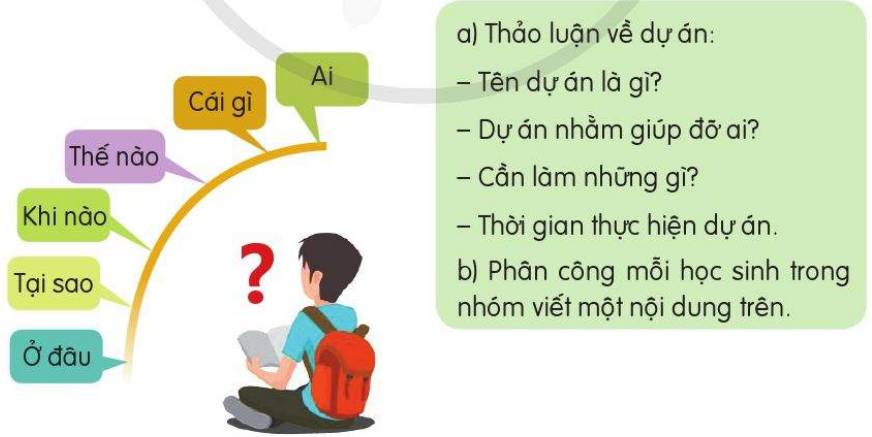
Học sinh dựa vào những gợi ý đã cho để phát triển và hoàn thiện dự án của nhóm mình.
Ví dụ tham khảo:
- Tên dự án: Trái tim yêu thương.
- Dự án giúp đỡ các bạn nhỏ hoặc cô bác đang gặp khó khăn.
- Những việc cần làm để triển khai dự án: Dự án cần quyên góp sách giáo khoa, đồ dùng học tập, quần áo,... gửi tặng các bạn nhỏ hoặc cô bác đang gặp khó khăn)
- Thời gian thực hiện dự án: (Học sinh nêu khoảng thời gian hoặc xác định thời gian cụ thể)
Chính quyền đô hộ thực hiện chính sách đồng hóa dân tộc ta nhằm đồng hóa dân tộc và thôn tính nước ta vĩnh viễn



eazy
chịu thui tham khảo tư liệu đi