

Vocabulary
bilingual (adj) /ˌbaɪˈlɪŋɡwəl/: người sử dụng được hai thứ tiếng; sử dụng được hai thứ tiếng
get by in (a language) (v) /get baɪ ɪn/: cố gắng sử dụng được một ngôn ngữ với với những gì mình có
fluent (adj) /ˈfl uːənt/: trôi chảy
pick up (a language) (v) /pɪk ʌp/: học một ngôn ngữ theo cách tự nhiên từ môi trường xung quanh
rusty (adj) /ˈrʌsti/: giảm đi do lâu không thực hành/sử dụng
reasonably (adv) /ˈriːznəbli/: vừa phải/ một cách hợp lý
imitate (v) /ˈɪmɪteɪt/: bắt chước
Match.
(Kéo thả hoặc click vào để điền)
Choose the correct word.
She compliments me for being
- good
- skillful
- fluent
- bad
Choose the correct word.

I can't speak a word (with/ of/ at/ in) French because I dont'k know it.
Fill the blanks with the verbs in the box.
If you don't what a word means, try to the meaning, or the word in your dictionary. All foreign speakers (4) an accent, but that doesn't matter. To make your pronunciation better, listen to English speakers and try to them. Don't worry if you mistakes or don't try to a mistake – that's normal! It's often useful to words from one language to the other, but it's best when you can start to think in the new language.
(Kéo thả hoặc click vào để điền)
Odd one out.
Listen and repeat, paying attention to the tones of the underlined words in each conversation.
1. A: I'd like some oranges, please.
B: But we don't have any oranges.
2. A: What would you like, sir?
B: I'd like some oranges.
3. A: I'll come here tomorrow.
B: But our shop is closed tomorrow.
4. A: When is your shop closed?
B: It is closed tomorrow.
Pronunciation
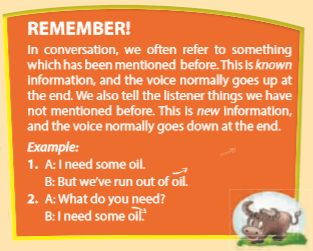
Listen to the conversations. Do you think the voice goes up or down at the end of each second sentence? Draw a suitable arrow at the end of each line.
A: Tom found a watch on the street.
B: No. He found a wallet on the street.
- down
- up